
Can TMJ Be Cured Permanently?

TMJ treatment consultation Dr. Prostho Dental Clinic Mumbai

Can TMJ Be Cured Permanently? What Patients in Mumbai Need to Know

Yes. TMJ can be permanently resolved in many patients, particularly when the cause is identified and addressed correctly. Most TMJ cases caused by bite imbalance or early disc displacement achieve complete resolution with conservative treatment. Cases caused by degenerative joint disease are managed long-term rather than cured, but symptoms can be significantly reduced. The key is accurate diagnosis and targeted, conservative treatment.

What Does “Cured” Mean for TMJ?

The word “cure” in TMJ management means different things depending on the cause:

      • COMPLETE RESOLUTION (effectively cured): Patients whose TMJ pain is caused by bite imbalance a high crown, uneven dental work, or occlusal interference can achieve complete and permanent resolution once the bite problem is corrected. When the cause is removed, the symptoms do not return.
      • Long-term remission: Patients with disc displacement who achieve disc recapture through repositioning splint therapy can remain pain-free and symptom-free long-term provided they maintain correct bite stability and manage bruxism habits.
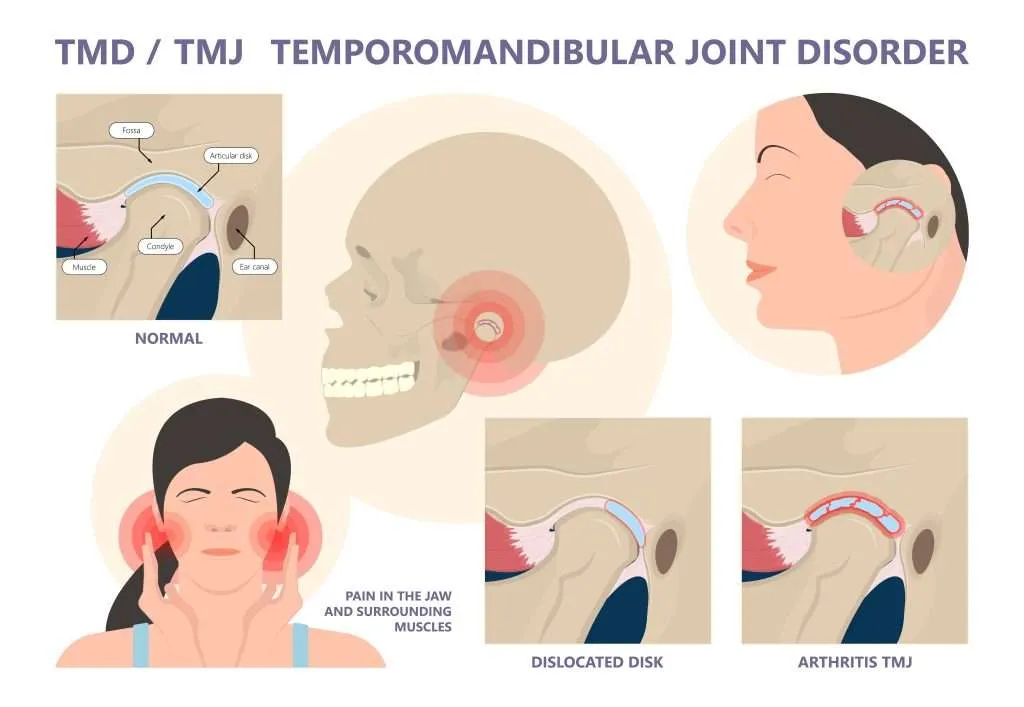
      • Long-term management: Patients with TMJ osteoarthritis or severe disc degeneration may not achieve a complete cure, but conservative management splints, bite correction, physiotherapy can reduce pain by 70-90% and maintain comfortable function indefinitely.
      • Recurring cases: Patients who clench severely, have unstable dental restorations, or do not address lifestyle triggers (stress, posture, diet) may experience recurrence. Long-term maintenance an ongoing night splint, periodic bite reviews prevents progression.

Which TMJ Cases Have the Best Long-Term Outcomes?

Based on clinical experience and evidence, the following TMJ presentations have the best outcomes:

      • Bite-related TMJ pain: Excellent prognosis. Bite correction is often sufficient for complete resolution.
      • MPDS (muscle pain) without structural joint damage: Very good prognosis with conservative management. Most patients are symptom-free within 3-6 months.
      • Early disc displacement with reduction (clicking with no locking): Good prognosis with repositioning and stabilisation clicking may reduce or resolve.
      • Disc displacement without reduction (locking): Moderate prognosis. Most cases improve significantly with conservative treatment, though full disc recapture is less predictable.
      • TMJ osteoarthritis: Management rather than cure. Symptoms improve significantly but structural changes are permanent. Long-term splint use and bite stability are key.

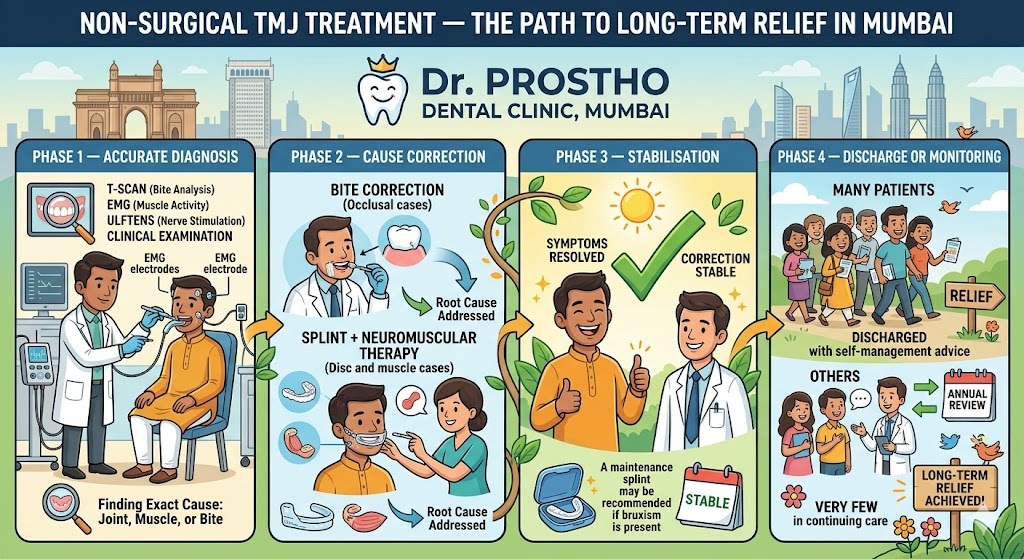
Non-Surgical TMJ Treatment — The Path to Long-Term Relief in Mumbai

At Dr. Prostho Dental Clinic in Mumbai, the path to long-term TMJ relief follows a structured protocol:

      • Phase 1 — Accurate diagnosis: T-Scan, EMG, ULFTENS and clinical examination identify the exact cause joint, muscle, or bite.
      • Phase 2 — Cause correction: The identified cause is addressed specifically. Bite correction for occlusal cases; splint + neuromuscular therapy for disc and muscle cases.
      • Phase 3 — Stabilisation: Confirming that symptoms have resolved and the correction is stable. A maintenance splint may be recommended if bruxism is present.
      • Phase 4 — Discharge or monitoring: Many patients are discharged after Phase 3 with self-management advice. Others require annual reviews. Very few require ongoing active treatment.

Frequently Asked Questions | TMJ Cure

Is TMJ disorder permanent?

Not necessarily. Many TMJ conditions resolve completely with correct treatment. Bite-related TMJ pain and muscle-origin MPDS frequently achieve permanent resolution. Structural joint changes (arthritis, advanced disc degeneration) are permanent but can be managed effectively to restore comfortable function.

Can TMJ come back after treatment?

Yes, particularly if the underlying cause is not fully addressed. Bruxism, bite instability from new dental work, stress, or poor posture can trigger recurrence. A long-term maintenance night splint and periodic bite reviews significantly reduce the risk of recurrence.

How long does TMJ treatment take to work?

Most patients notice significant improvement within 3-6 weeks of starting conservative treatment. Full resolution or stable long-term management typically takes 3-6 months. Very long-standing cases may require a longer treatment phase.

Is there a permanent cure for jaw clicking?

Jaw clicking caused by disc displacement may reduce or stop with anterior repositioning splint therapy and subsequent stabilisation. However, a click that returns to normal position on its own (clicking with reduction) may remain some residual clicking without pain is clinically acceptable and does not require treatment.

Experiencing TMJ symptoms?

Dr. Sorabh Jain, Prosthodontist with Special Interest in TMJ & Orofacial Pain in Mumbai. Book an evaluation to get a clinical assessment and a clear treatment plan.

doctorsorabhjain
Latest posts by doctorsorabhjain (see all)