
Is TMJ Serious | When to Worry and When Not To

Is TMJ serious — patient consultation Dr. Prostho Dental Clinic Mumbai

Is TMJ Serious? When to Worry and When Not To

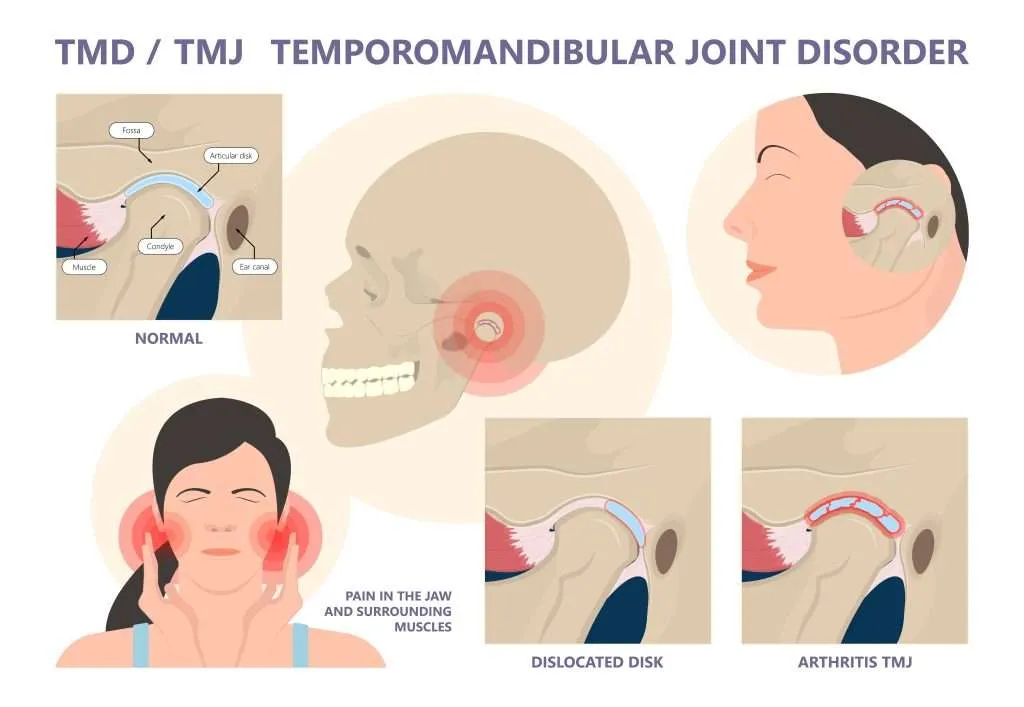
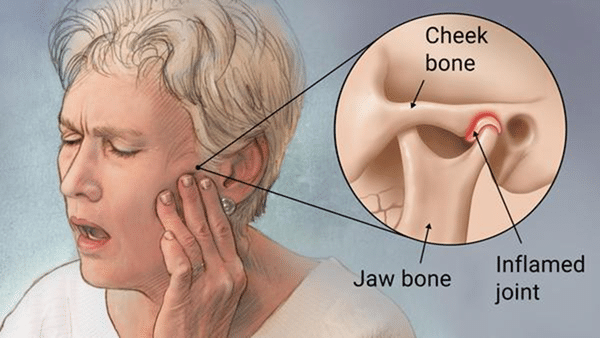
TMJ disorders are rarely life-threatening, but they are not trivial. Left untreated, TMJ conditions can progressively worsen causing chronic pain, increasing joint damage, tooth wear from grinding, and significantly reduced quality of life. Early evaluation and conservative treatment produces the best outcomes. The question is not just “is TMJ serious” but “how serious is my TMJ and am I getting the right help?”

When Is TMJ Not Serious — and When Is It?

NOT IMMEDIATELY SERIOUS — but worth monitoring:

      • Occasional jaw clicking without pain that has been present unchanged for years
      • Mild morning jaw stiffness that resolves within 30 minutes
      • Brief jaw fatigue after an unusually large or tough meal

REQUIRES EVALUATION — potentially progressive:

      • Jaw pain that has been present for more than 4 weeks
      • Clicking that has recently started or is getting louder
      • Limited mouth opening unable to open as wide as before
      • Pain spreading to the ear, temple or neck
      • Headaches that are worse in the morning
      • Jaw that has locked even briefly

REQUIRES PROMPT EVALUATION — significant risk of worsening:

      • Complete jaw locking unable to open or close
      • Severe, acute jaw pain with rapidly worsening opening restriction
      • TMJ pain developing after a fall, collision or dental procedure
      • Significant tooth wear appearing alongside jaw pain indicates severe bruxism

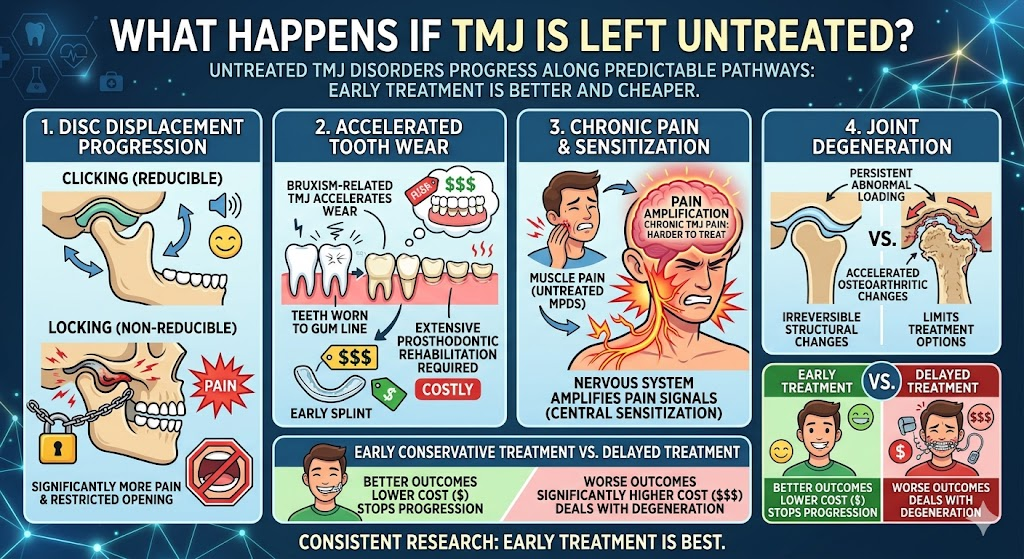
What Happens If TMJ Is Left Untreated?

Untreated TMJ disorders tend to progress along predictable pathways:

      • Disc displacement progression: Clicking (reducible displacement) can progress to locking (non-reducible displacement) if the disc continues to deteriorate and deform. This is associated with significantly more pain and restricted opening.
      • Tooth wear: Bruxism-related TMJ conditions accelerate tooth wear. Teeth that are worn to the gum line require extensive prosthodontic rehabilitation far more costly than an early splint.
      • Chronic pain: Untreated MPDS can become central sensitised where the nervous system amplifies pain signals beyond the original source. Chronic TMJ pain is significantly harder to treat than acute.
      • Joint degeneration: Persistent abnormal loading accelerates osteoarthritic changes in the joint irreversible structural changes that limit treatment options.

The consistent finding in TMJ research is that early, conservative treatment produces better outcomes than delayed treatment — and at significantly lower cost.

Frequently Asked Questions | Is TMJ Serious?

Can TMJ disorder go away on its own?

Yes — indirectly. TMJ disorders can cause a sensation of ear fullness, muffled hearing, or tinnitus (ringing in the ear) through referred pain and muscle tension affecting the Eustachian tube. Actual hearing loss from TMJ is rare, but ear symptoms are common. An ENT examination will rule out true ear pathology.

Is TMJ dangerous?

TMJ disorder itself is not life-threatening. However, severe, untreated TMJ can significantly impair eating, speaking and quality of life, and can lead to chronic pain, irreversible joint damage, and extensive tooth wear requiring costly rehabilitation. Early treatment is significantly better than delayed intervention.

Experiencing TMJ symptoms?

Dr. Sorabh Jain, Prosthodontist with Special Interest in TMJ & Orofacial Pain in Mumbai. Book an evaluation to get a clinical assessment and a clear treatment plan.

doctorsorabhjain
Latest posts by doctorsorabhjain (see all)