TMJ Pain from Dentures: Why a new denture may not be the first solution
Can a denture problem actually be a TMJ problem?
When an elderly patient complains that a denture is painful, the obvious solution may seem to be a denture adjustment, relining or a completely new denture. But sometimes, the denture is only one part of the problem.
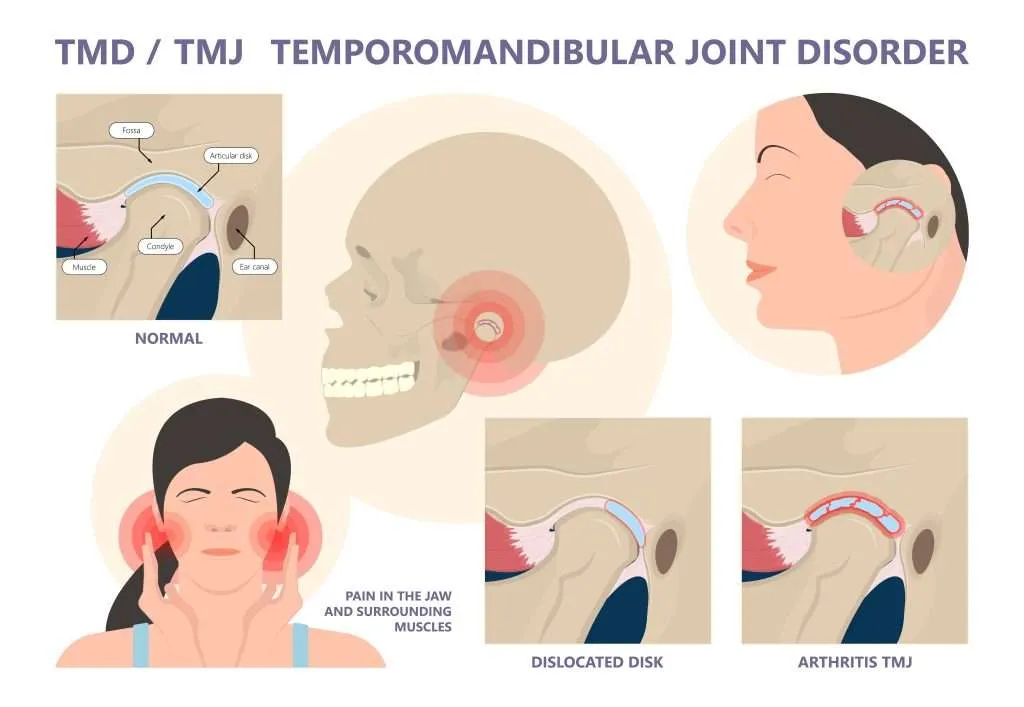
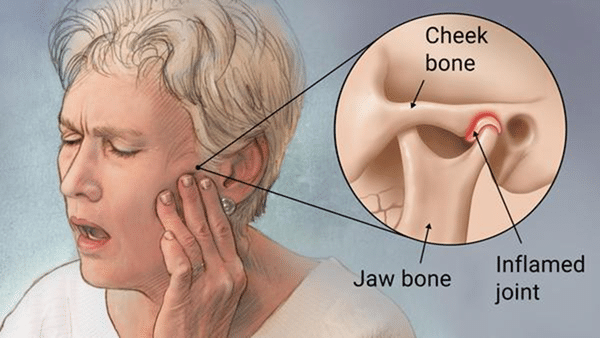
The pain may involve the temporomandibular joint (TMJ), masticatory muscles, oral tissues and the prosthetic relationship between the upper and lower dentures. This was the situation in an 88-year-old female patient who was referred for denture relining and fabrication of a new complete denture.
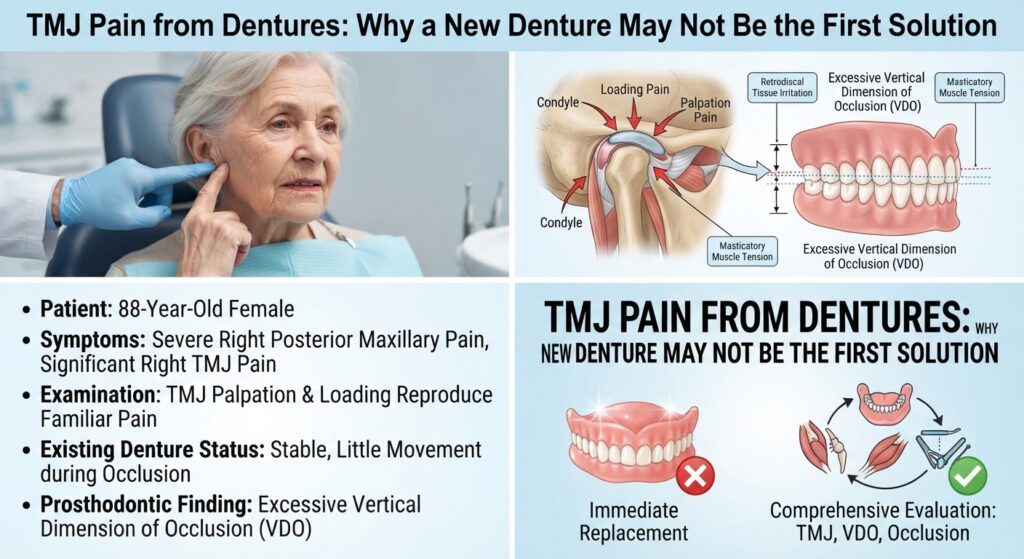
She had been experiencing problems for approximately one year after her existing dentures were made. When she presented, she complained of severe pain in the right posterior maxillary region and significant pain around the right TMJ, making chewing and dental treatment increasingly difficult.
The case highlights an important principle in denture-related TMJ pain management:
When a denture patient develops significant jaw pain, replacing the denture immediately may not always be the first step. The source of the pain and the contributing factors need to be understood first.
On examination, palpation of the right TMJ region reproduced the patient’s severe, familiar and non-radiating pain.
A loading examination of the right TMJ also reproduced her familiar pain, raising concern for intra-articular TMJ involvement, including possible irritation of the retrodiscal tissues. She also complained of pain around the 43 region at the crest and over the 45–46 buccal region. Therefore, this was not simply a case of an unstable or loose denture.
Interestingly, the existing denture demonstrated little to no significant movement during occlusion. However, one important prosthodontic finding was that the vertical dimension of occlusion appeared excessive.
This raised a more important question:
Could the existing prosthetic relationship be contributing to the patient’s jaw and TMJ pain?
The denture could therefore not be evaluated in isolation. The vertical dimension, occlusion, mandibular function, masticatory muscles and TMJ all needed to be considered together.
Why Was a New Denture Not Made Immediately?
The initial referral was for a denture reline and new denture. However, this was not a straightforward denture case.
At 88 years of age, the patient could not sit independently for prolonged periods. She had also become considerably agitated because the problem had persisted for almost a year. Multiple lengthy appointments for definitive denture fabrication would therefore have been difficult to tolerate.
More importantly, she was already experiencing significant pain. The treatment priority became:
First make the patient more comfortable. Then proceed toward definitive denture rehabilitation.
This is an important consideration when treating elderly patients with complex medical and functional needs.
Could the Denture Simply Be Discontinued?
One useful way of assessing whether a denture may be acting as a continuing mechanical trigger is to temporarily remove it.
The patient was therefore advised to discontinue wearing the denture for approximately one week, following which her symptoms could be reassessed. However, she declined. The reason was understandable. Although the denture could potentially have been contributing to her symptoms, she had very limited alternatives for chewing and depended on the denture for function. Therefore, she continued to wear it.
This illustrates an important practical point:
The ideal diagnostic approach is not always the most practical approach for an elderly patient.
Treatment has to take into account not only the clinical diagnosis, but also what the patient can realistically manage in everyday life.
Was Denture Tooth Wear the Problem?
The denture teeth were also evaluated. Denture teeth can wear with time and may alter the occlusal relationship. However, in this patient, the amount of wear observed did not appear sufficient to explain the complete clinical picture.
Her use of the denture was relatively limited, although she had been using it conventionally. But there was still no practical alternative for chewing. Therefore, the problem could not simply be described as:
“The denture teeth are worn, so make a new denture.”
The patient’s TMJ pain, denture relationship, vertical dimension, oral tissues and functional requirements all needed to be considered.
Why Pain Medication Was Not the Complete Solution
The patient had a long and complex medical history involving cardiac and pulmonary problems and was already taking multiple medications. In such a patient, simply adding another pain medication was not considered the complete answer.
The concern was that if there was a physical or mechanical contributor to the pain, medication might reduce the symptom without removing the contributing trigger.
The objective was therefore to identify and reduce the potential contributing factor while using a conservative approach appropriate for her medical circumstances. This is particularly relevant in elderly patients with multiple systemic conditions and polypharmacy.
The patient had a long and complex medical history involving cardiac and pulmonary problems and was already taking multiple medications. In such a patient, simply adding another pain medication was not considered the complete answer.
The concern was that if there was a physical or mechanical contributor to the pain, medication might reduce the symptom without removing the contributing trigger.
The objective was therefore to identify and reduce the potential contributing factor while using a conservative approach appropriate for her medical circumstances. This is particularly relevant in elderly patients with multiple systemic conditions and polypharmacy.
Why QuadraTENS Was Not Used
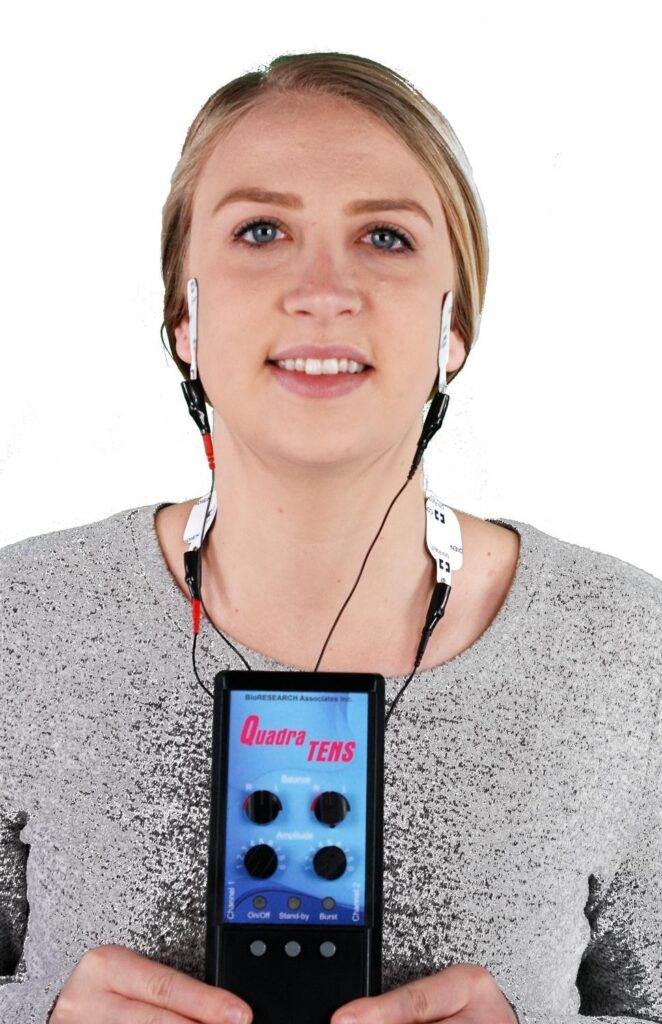
One conservative treatment option considered for pain and muscle management was ultra-low-frequency TENS (ULF-TENS). Importantly, this was not conventional TENS. The specific device considered was the QuadraTENS ULF-TENS system (BioRESEARCH Associates Inc., USA).
QuadraTENS is a dedicated ULF-TENS system used in dental applications for approaches involving masticatory and facial muscle relaxation and craniofacial/TMD-related management. However:
Ultra-low-frequency TENS (QuadraTENS, BioRESEARCH Inc., USA) is contraindicated in pacemaker patients.
Therefore, electrical stimulation was not selected because of the patient’s pacemaker and the relevant device-safety considerations. This removed ULF-TENS as a treatment option for this particular patient, and a different conservative approach was required.
Photobiomodulation for TMJ Pain Management
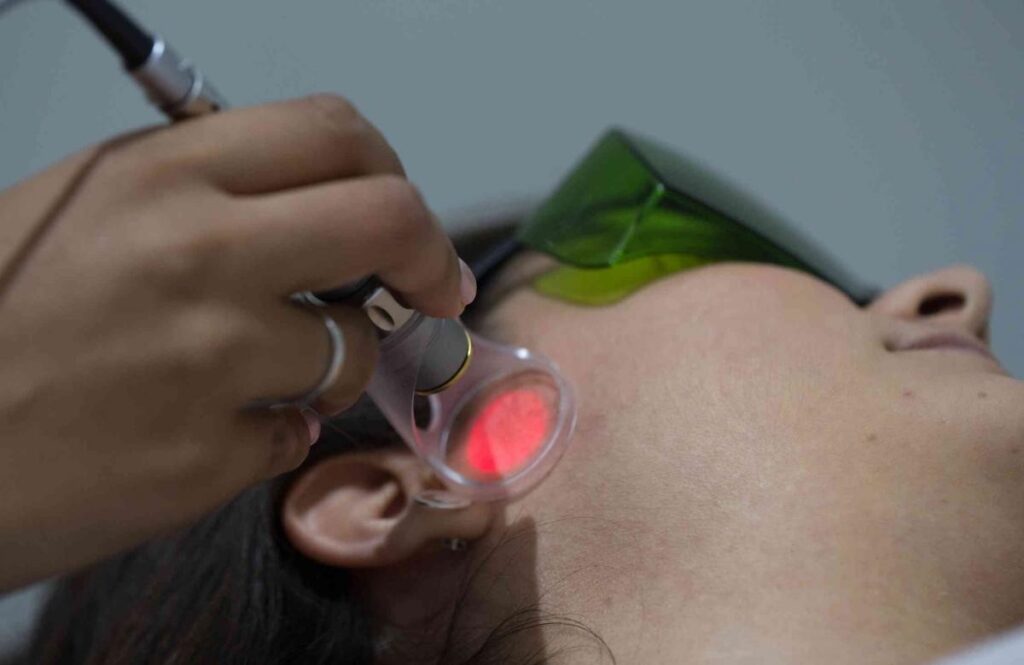
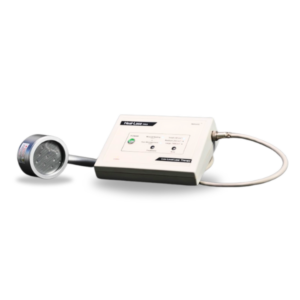
Considering the patient’s age, medical history, inability to tolerate prolonged procedures and the need to reduce her pain before definitive denture treatment, photobiomodulation therapy (PBM) was selected as a conservative approach.
Three treatment sessions were provided to the TMJ region and surrounding musculature, including the temporalis and masseter, as well as relevant painful areas. The treatment incorporated 810 nm and 640 nm wavelengths.
The purpose was not to claim that laser therapy “repaired” the TMJ or definitively treated a specific intra-articular pathology. The practical objective was:
To reduce pain and improve the patient’s comfort sufficiently to allow subsequent prosthodontic treatment.
Photobiomodulation has been investigated as a conservative adjunct for temporomandibular disorders, with evidence suggesting potential benefits for pain and some functional outcomes. However, treatment parameters vary substantially between studies, so PBM should be considered as part of an individualized treatment plan rather than a universal protocol.
The Patient’s Response
Following the photobiomodulation sessions, the patient became considerably more comfortable. She was much more relaxed during subsequent appointments and reported little to no significant pain.
The objective was not merely to obtain temporary pain relief. The patient needed to become comfortable enough to tolerate definitive prosthodontic treatment.
The existing denture was also modified, with the vertical dimension of occlusion reduced by approximately 2 mm. The aim was to address a potentially contributing prosthetic factor while monitoring her clinical response.
The treatment sequence therefore became:
TMJ assessment → conservative pain management → prosthetic evaluation → reduction of excessive vertical dimension → observation → follow-up → definitive denture rehabilitation.
Three Months of Follow-Up
The patient was then followed for approximately three months. During this period, there was no recurrence of the significant TMJ pain that had initially brought her to the clinic.
This period of follow-up was important. Rather than moving immediately from symptomatic improvement to definitive denture fabrication, the patient’s response was observed over time.
After three months, with the pain remaining controlled, a new denture was fabricated with the revised vertical dimension. The definitive prosthesis was therefore made after the patient’s symptoms had stabilised.
What Does This Case Teach Us About Denture-Related TMJ Pain?
A patient may present with what appears to be a straightforward complaint:
“My denture hurts.”
But the underlying problem may involve several factors. A comprehensive evaluation may need to consider:
- Denture fit and stability
- Vertical dimension of occlusion
- Occlusal relationships
- Denture tooth wear
- Residual ridge condition
- Local ridge or mucosal tenderness
- Masticatory muscle pain
- TMJ pain
- Mandibular function
- Medical history and medications
- The patient’s ability to tolerate treatment
- The patient’s dependence on the denture for chewing
This becomes especially important in elderly denture patients.
Can Dentures Cause TMJ Pain?
Not necessarily.
Dentures do not automatically cause temporomandibular disorders. However, changes in denture fit, vertical dimension, occlusion, mandibular function, muscle activity and adaptation may become relevant when a patient develops jaw or TMJ symptoms.
Therefore, an elderly denture wearer who develops:
- Pain around the ear or jaw joint
- Pain while chewing
- Facial or masticatory muscle pain
- New jaw discomfort after a denture change
- Persistent pain despite denture adjustment may need more than simply a denture reline or replacement. The important question is:
Is the denture the problem — or is the denture interacting with an already painful jaw system?
Photobiomodulation and TMJ Pain
Photobiomodulation is being increasingly investigated as a conservative approach for TMJ pain, temporomandibular disorders and orofacial pain. The available evidence is encouraging for pain reduction in selected patients, but treatment protocols differ considerably.
Therefore, PBM should be viewed as one possible component of conservative TMJ pain management, rather than a replacement for clinical diagnosis or definitive prosthodontic treatment.
The Bigger Clinical Lesson
The most important lesson from this case was not simply the use of laser therapy. It was treatment sequencing.
The patient presented for a denture problem. But the first clinical problem that required attention was a painful jaw system.
By managing the pain conservatively, addressing a potentially contributing prosthetic factor, observing the patient over three months and then proceeding with definitive denture fabrication, treatment could be performed in a more controlled manner.
Sometimes the best way to make a new denture is to first make the patient comfortable enough to receive it.
Frequently Asked Questions
Can dentures cause TMJ pain?
Should I get a new denture if my denture causes jaw pain?
Can a high vertical dimension cause jaw discomfort?
What is ULF-TENS for TMJ pain?
Can patients with pacemakers receive QuadraTENS?
What is photobiomodulation for TMJ pain?
Clinical Disclaimer
This article describes the management of an individual clinical case. The treatment sequence and therapeutic modalities described here should not be interpreted as universally appropriate for every patient.
TMJ pain, denture-related pain and orofacial pain require individual clinical assessment, particularly in elderly patients with significant medical conditions, multiple medications or implanted medical devices.
Experiencing jaw pain when eating or chewing?
Dr. Sorabh Jain, Prosthodontist with Special Interest in TMJ & Orofacial Pain in Mumbai. Book an evaluation to get a clinical assessment and a clear treatment plan.
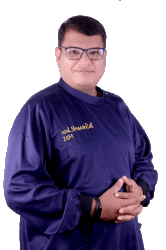
Dr. Jain has presented original research at five Indian Prosthodontic Society (IPS) national conventions and received First Position at the Indian Dental Association (IDA) academic competition (Udaipur, 2012). He is Visiting Prosthodontist at HCG Cancer Hospital, Mumbai, and consults at over 100 dental clinics across the city.
Clinical specialities: TMJ pain management · Dental implants · Complete dentures · Maxillofacial prosthetics · Smile design · Oral cancer rehabilitation.
- TMJ pain from dentures - 23 August 2026
- What Doctor Should I See for TMJ in Mumbai? - 20 June 2026
- Is TMJ Serious | When to Worry and When Not To - 20 June 2026