Jaw Locking Treatment in Mumbai: When It Feels Scary… But Doesn’t Always Need Aggressive Treatment
A few months ago, a 54-year-old female patient walked into my clinic, clearly anxious. She looked at me and said, “Doctor, my mouth gets stuck… I have to press near my ear every time to open it fully.” She had been dealing with this issue for almost 8–9 months. Like most patients with jaw problems, she was already worried that something serious was wrong.
What She Had Already Been Told
Before coming to me, she had already consulted a well-known TMJ specialist in Mumbai. She was clearly advised, “You need an occlusal splint” (a plastic appliance worn on teeth to guide the jaw position). She came to me specifically to get that splint made. But she said something very honestly, “If possible, I don’t want to depend on something lifelong.” That one sentence tells you that most patients feel they want relief, but not dependency.
I Didn’t Start With Treatment
Instead of jumping into making a splint, I told her, “Let me first understand your jaw properly… then we’ll decide.” I spent around 45 minutes examining her. Not just reports, but how her jaw opens:
- how it moves
- where it stops
- What happens when guide
Because in TMJ problems, movement tells the real story — not just scans.
What I Found?
- Her mouth opened till about 30 mm, then suddenly stopped
- The jaw shifted to the right side
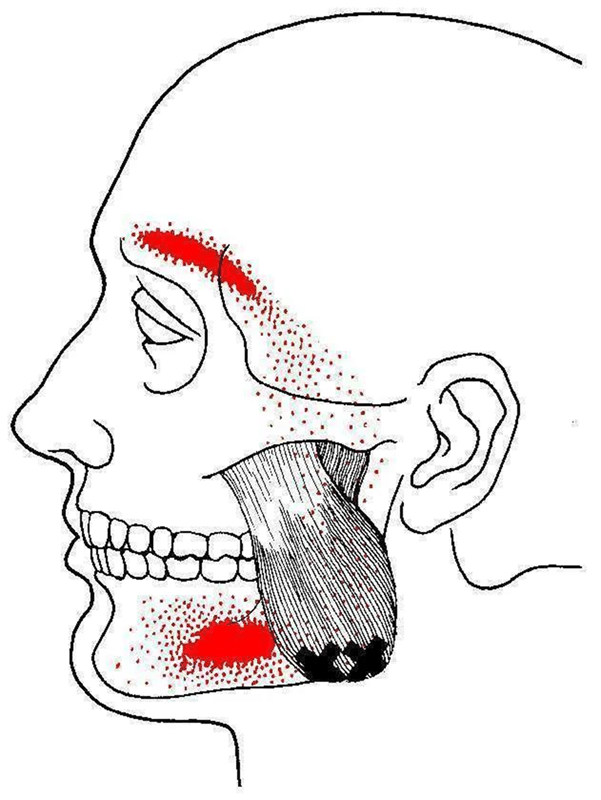
- To open fully, she had to press on the left joint near her ear
- There was a clear block and discomfort at that moment
She also had a clicking sound for 20–25 years, which she had ignored since it wasn’t painful.


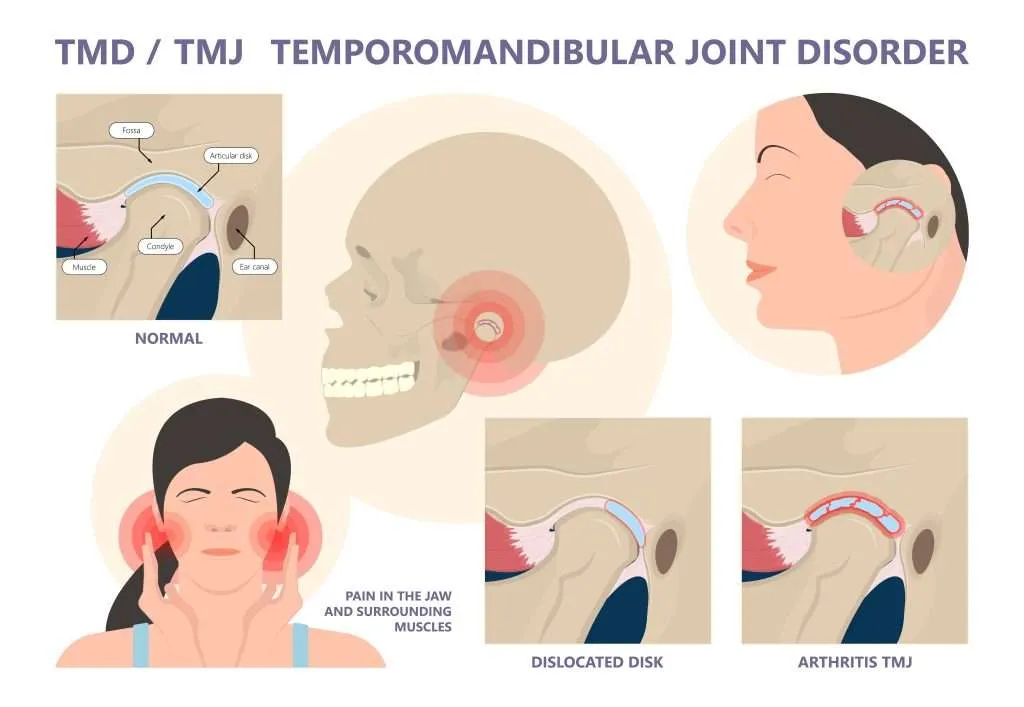
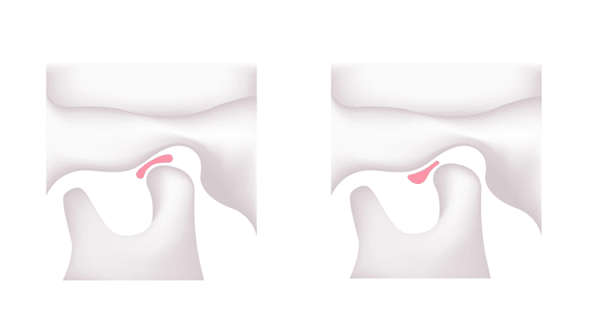
Illustration comparing the shapes of the articular disk ( normal jaw and Temporomandibular disorders )
What Was Actually Happening (In Simple Words)
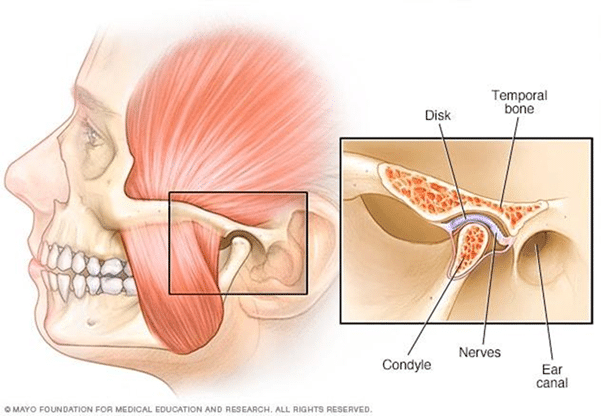
Inside your jaw joint (TMJ –temporomandibular joint), there is a small soft spongy disc (like the cushion in your knee joint, sitting between the skull and jaw bone)
In her case:
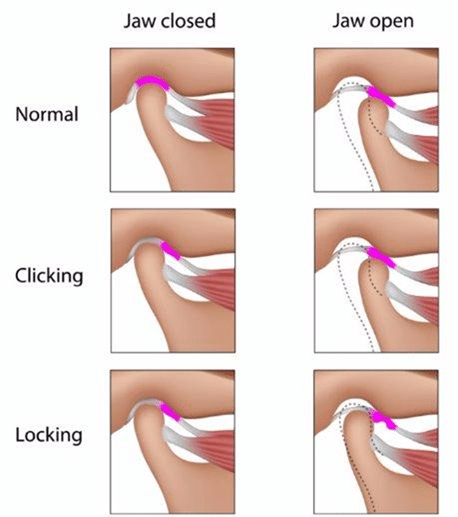
- This disc was not moving smoothly with the jaw
- So when she opened her mouth, the jaw got temporarily stuck
- And when she pressed from outside, she was actually helping the joint move past that blockage
This condition is called, Disc displacement with intermittent locking, meaning:
- It is a movement problem
- Not damage
- Not something “broken”
The Turning Point
Even though she came for a splint, I told her clearly, “At this stage, I don’t feel we should rush into an appliance. Let’s first see how your joint responds.” She was surprised… but also relieved because no one had told her that sometimes, correct guidance is more important than immediate treatment.
What We Did: Nothing complicated.
- No machines
- No aggressive procedures
- No immediate splint
Just simple, guided jaw movements and awareness.
What Happened Over Time, she followed everything sincerely. Interestingly, she didn’t come back immediately. After almost 2 months, she returned — and the change was very clear.
The Change Was Real
- No more juggling the jaw with her hand
- No need to push the joint
- Mouth opening improved to 42–44 mm
- The left side felt completely normal
She told me, “Within the first week itself, I felt the difference… I followed everything properly… and now it feels like nothing ever happened.” And the most surprising part, “That clicking sound I had for 25 years… it just disappeared.”
Then a New Concern
Now she came back with a new fear, “Doctor, now I hear a click on the right side.” This is where most people panic again.
What I Explained
I told her very simply, “A painless click is not dangerous… as long as your jaw opens properly.” We continued with basic care and monitoring.
Final Update
After about a month, she called me and said, “Doctor, that right-side click has also reduced now.” “I’m completely comfortable.”
The Most Important Part of This Case, Let’s be very clear:
- She was advised to get a splint elsewhere
- She came ready for it
- But we did not rush into treatment
And in the end,
- No splint was needed
- No machines were used
- No invasive procedures
Her body adapted and corrected the movement — with the right guidance.
What This Means for You: Many patients panic when they hear:
- “Jaw clicking”
- “Disc problem”
- “You need a splint immediately”
But the truth is:
Not every TMJ problem needs aggressive treatment. Sometimes:
- The joint needs the correct direction
- And your body does the rest
When Should You Take It Seriously? If you have:
- Jaw locking
- Difficulty opening
- Pain near the ear
- Clicking with discomfort
Then yes, get it evaluated. But don’t jump into treatment without understanding the problem first.
Jaw Locking or TMJ Problems in Mumbai?
If you are based in Mumbai and experiencing:
- Jaw locking
- Clicking near the ear
- Difficulty opening your mouth
- Pain while chewing
It’s important to get a proper TMJ evaluation, not just a quick prescription. At my clinic in Mumbai, I focus on:
- Understanding the root cause of jaw problems
- Avoiding unnecessary splints or long-term dependency
- Providing simple, effective, patient-specific care
A Simple Thought
The goal is not to treat every sound in your jaw…
The goal is to make your jaw work comfortably again.
If you are facing similar symptoms, a proper evaluation can help you understand whether you really need treatment or just the right guidance.
Dr. Jain has presented original research at five Indian Prosthodontic Society (IPS) national conventions and received First Position at the Indian Dental Association (IDA) academic competition (Udaipur, 2012). He is Visiting Prosthodontist at HCG Cancer Hospital, Mumbai, and consults at over 100 dental clinics across the city.
Clinical specialities: TMJ pain management · Dental implants · Complete dentures · Maxillofacial prosthetics · Smile design · Oral cancer rehabilitation.
- TMJ pain from dentures - 23 August 2026
- What Doctor Should I See for TMJ in Mumbai? - 20 June 2026
- Is TMJ Serious | When to Worry and When Not To - 20 June 2026